My teaching practice is about making things. As a movement scholar, I have developed extensive, practical expertise in facilitating community spaces that can hold important but often difficult conversations. My pedagogy leverages this expertise to co-create flexible, adaptable, equitable learning communities with my students and to catalyze justice-oriented dialogue campuswide. For my work to transform classrooms to these ends, I was recognize by Florida State University with a 2021–2022 University Teaching Award for Community Engaged Teaching.
Building collaborative, community-engaged classrooms demands a very different sort of professorial authority. As a professor, I do not see or present myself as the holder of content. I am the builder of infrastructure through which we can all come together to learn from one another and our communities. Both my seminars and larger lecture courses open every class meeting with a check-in and close the same way with a check-out. My students and I build community agreements for holding this experimental space of praxis together, and we revisit these agreements regularly as a form of mutual accountability. This groundwork underlines for my students that community engagement starts with getting into different relationship with each other. They learn to value community partners as experts by practicing the tools that they have developed to better themselves. When my students begin the series of iterative projects that are the backbone of every course I teach, they do so as apprentices to our local community.
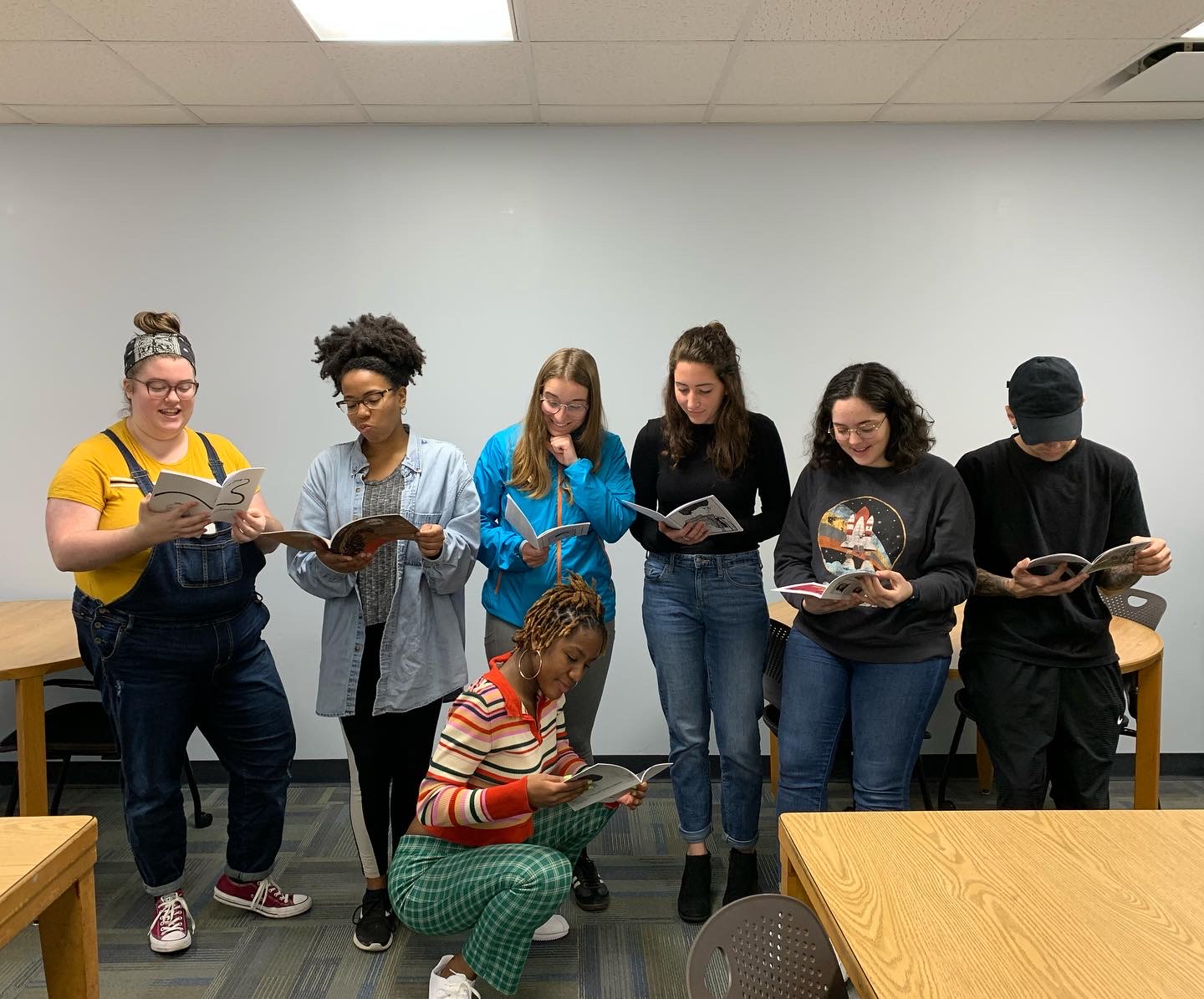

I am only able to co-create the community-engaged experiences I do with my students because I am deeply engaged in community myself. I constantly work to make the materials I develop for my classes publicly accessible through social media and open access channels. My “How To Make A Mutual Aid Map” guide (2020) has been adapted by thousands of educators, organizers, and people in crisis nationwide. Likewise, my use of mutual aid “pods” as a pedagogical method was featured by abolitionist organizer and educator Mariame Kaba during a more than 1,000-person webinar on transformative pedagogy (start at 37:22). This focus on mutual aid both grew from and also redoubled my abolitionist research, teaching, and practice. In 2020, in the wake of George Floyd’s murder, I was invited to contribute an article to the Journal for the Anthropology of North America on teaching abolition in these times. I agreed under the condition that I could co-author the piece with five of my best students. Through a summer of collective writing, we produced “The Ground on Which We Stand: Making Abolition,” which offered my students an unparalleled mentoring space for learning the nuances of refereed journal publication. We also organized social media posts to ensure our conclusions were accessible to the broadest possible audience.
 laura mctighe